The Japanese Grill by Tadashi Ono & Harris Salat · Page 150
Two foil packs, opposite jobs
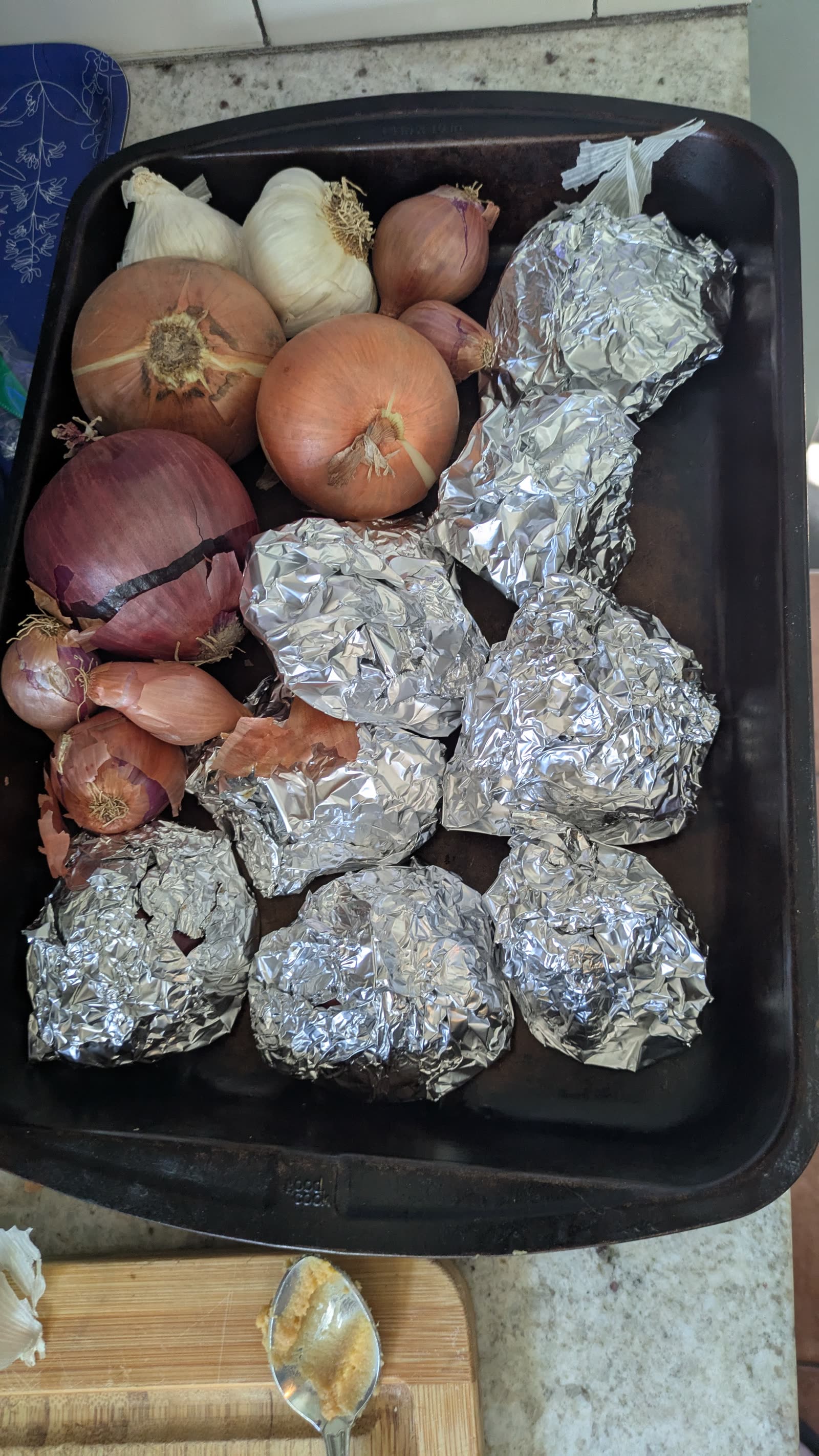
Same book. Same page. Two recipes that look like a pair: heavy-duty foil, halved bulb, fold and grill. Onions get a brush of soy sauce. Garlic gets a thin layer of shiro miso on the cut side, seam-side up.
I've been making both of these for a while now. This was my third honest attempt at running them together, and I went into it thinking the foil method made them basically the same recipe. They aren't.
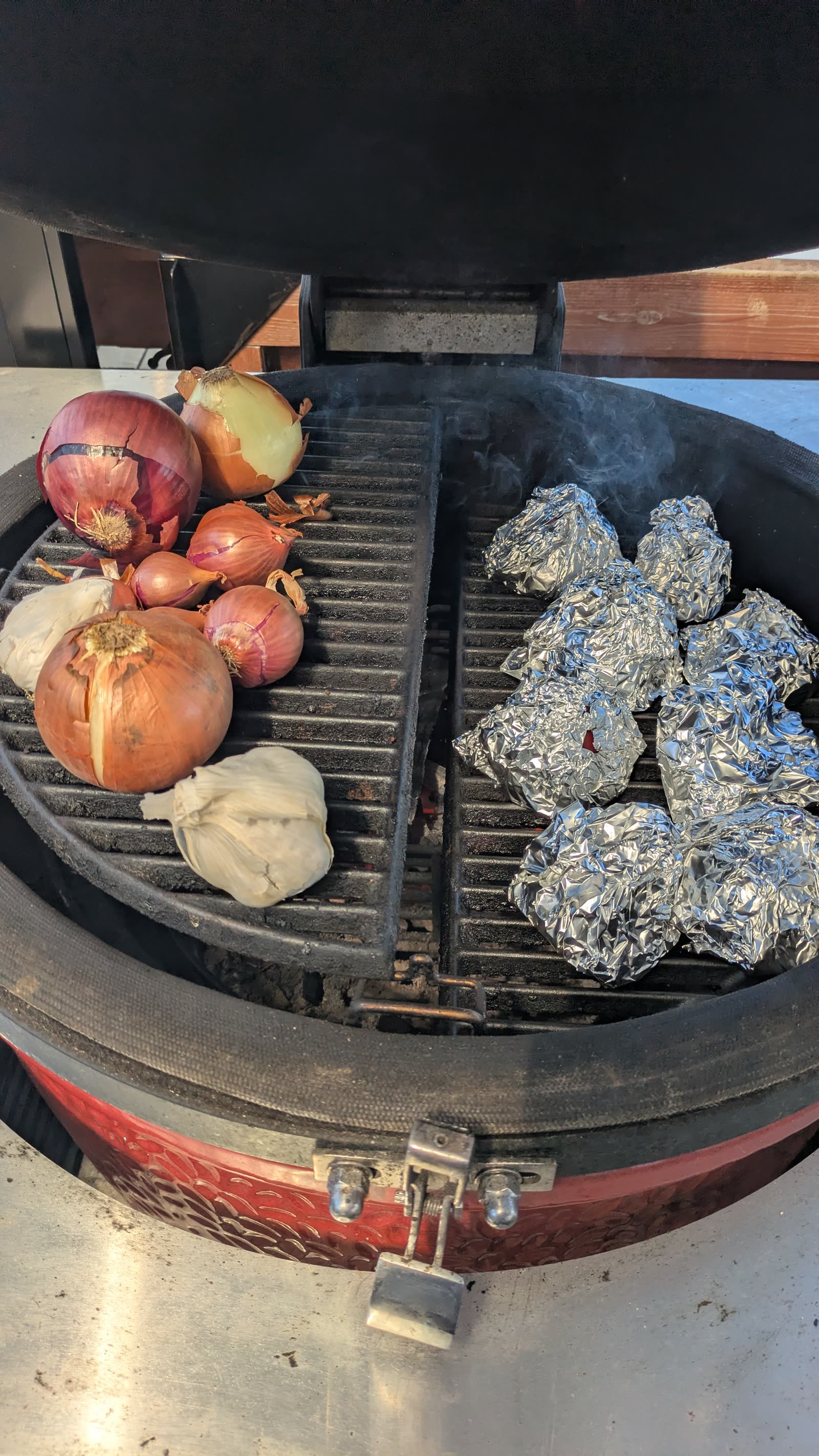
Sunday cook, low-and-slow
Why this book teaches by feel
Sidebar: the hand-test
One of the things that makes The Japanese Grill stand out from every other grilling book on my shelf: it doesn't tell you a number. It tells you to put your hand a few inches over the grate and count how long you can hold it there.
| Heat | Hand-test | My Kamado dome |
|---|---|---|
| Hot | 3-4 seconds | ~450°F+ |
| Medium-hot | 5-6 seconds | ~350°F |
| Medium | 8-10 seconds | ~250°F |
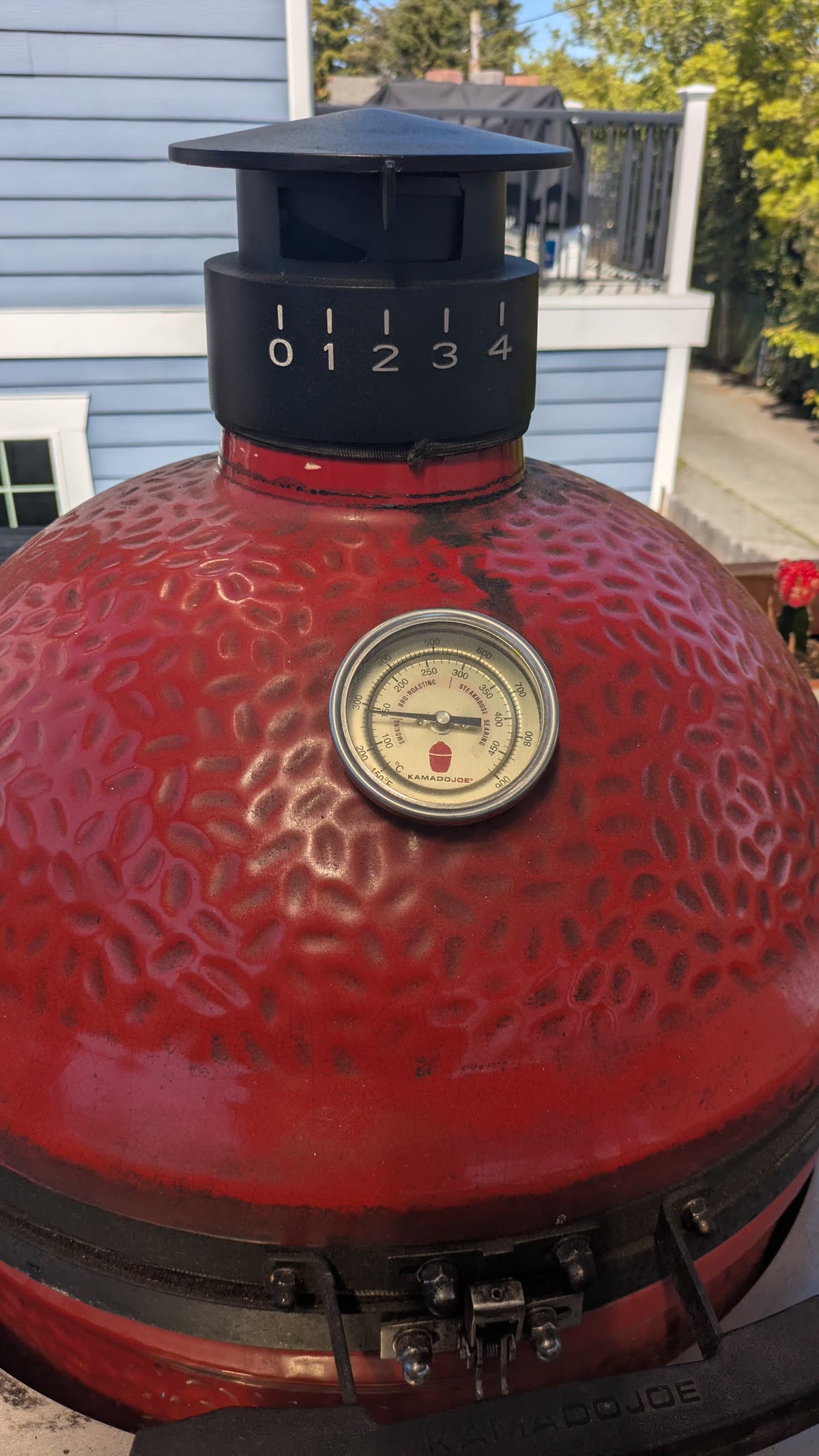
Most American grill books chase numbers. This one trusts the cook to feel it. After three attempts at these two recipes, I think the hand-test is more right than the dome thermometer ever was. Different grill, different ambient day, different food — the dome lies to you. Your hand doesn't.
The recipes both call for "medium." On my Kamado, that calibrates to ~250°F dome. So that's where I ran the cook.
Onions: built to be ignored
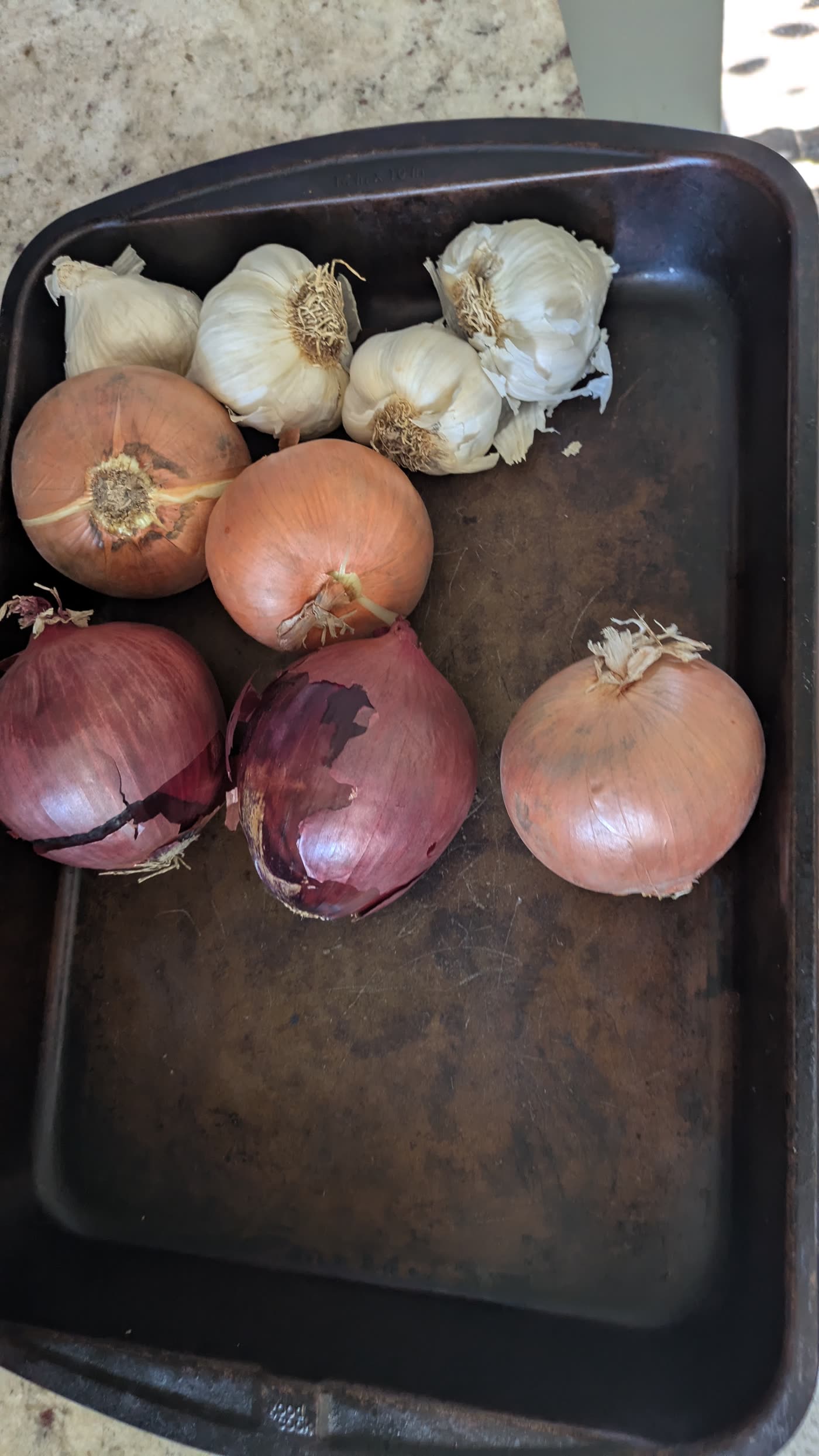
The onion recipe wants 35 minutes wrapped tight, turned at 10 and again at 20. Soy sauce caramelizes inside the foil. The recipe specifies Spanish onions halved across the center; I did that, plus a whole one for the hell of it, plus two red onions on top of the recipe call.
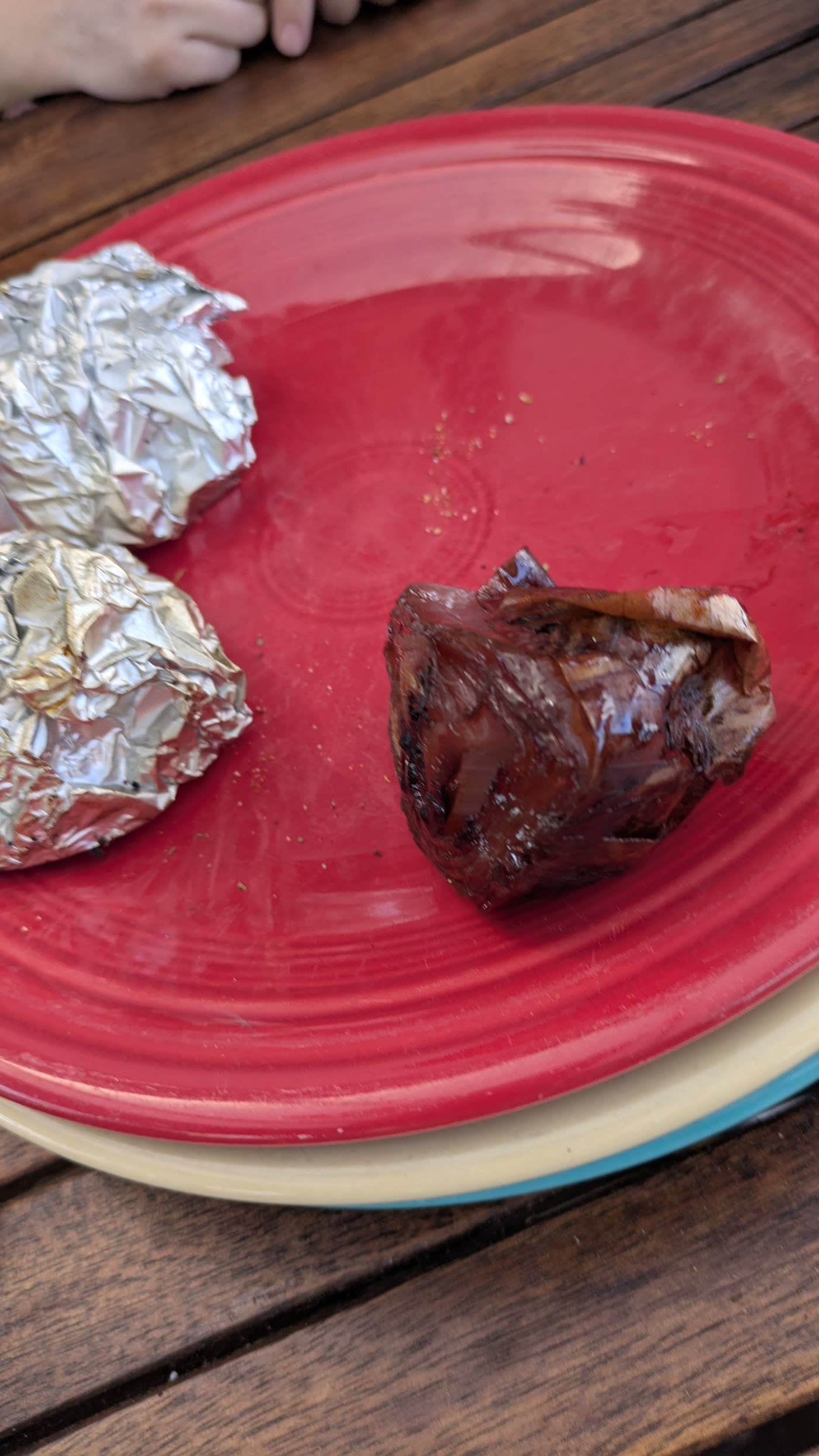
All of them came out great. The Spanish halves were the textbook win — sweet, soft, deeply caramelized. The whole one took the same amount of time and was almost more dramatic when you peeled it open. The red onions didn't read as Japanese anymore but they were good in their own way. The recipe is forgiving like that. Onions want time, and 30 minutes hands-off was fine for them.
Garlic: a 12-minute window
Here's where I learned something. The garlic recipe is 12 minutes, turned once. Not 35. Twelve.
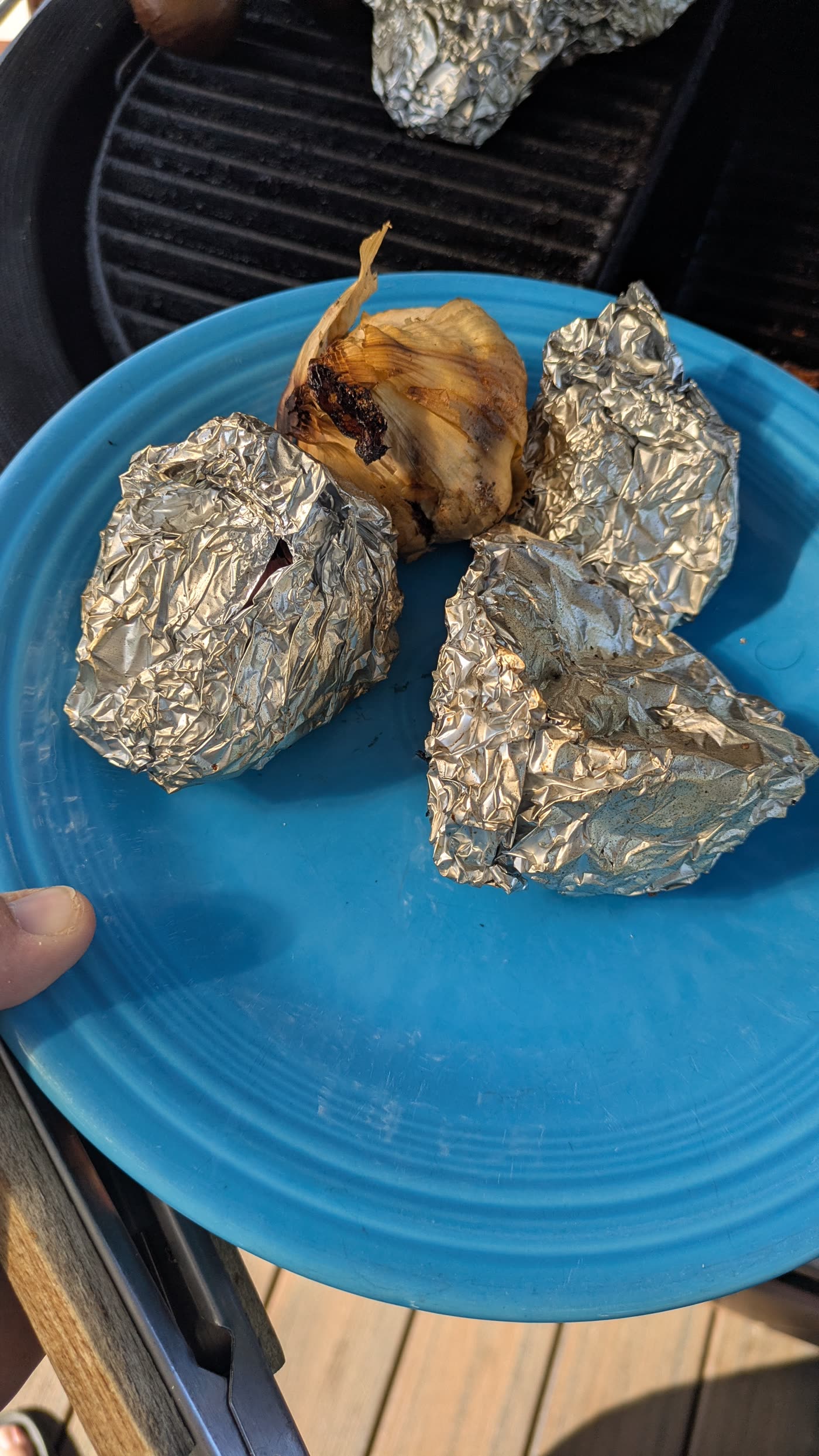
I did not pay attention to that. I put the garlic packs on the grill at the same time as the onions and walked away in 30-minute stretches like I was doing one cook, not two. By the time I unwrapped them, the miso had gone past caramelized and into char. About 40% of the cloves I had to pick around or throw out.
Same pack, opposite tolerances
Onions forgive. Garlic doesn't. The foil method makes them look like the same recipe but it really is two different cooks happening on the grate at the same time. That's the whole lesson of attempt #3 right there.
The trade-off
The thing I want to be honest about: this was the lowest-effort cook I've done with these recipes. Set the temp, walk away, drink something, come back. The onions handled the abuse beautifully. The garlic paid for it.
Less work, less yield. Both true. That's not failure — that's just the math you're picking when you choose how attentive you want to be.
Why I'll be back
The garlic that did survive tasted exactly like what the recipe promised. Soft, sweet, savory from the miso, almost potato-textured. Not bitter. The recipe isn't wrong. I am, for now. Three attempts in, I haven't fully cracked the timing on the garlic, but every cook gets me closer to it, and the cloves that come through clean are worth showing up for.
The family verdict on the spread overall: they liked it. The chicken got picked over fast, the onions disappeared, and the un-burnt garlic got fought over.
The chicken got lucky
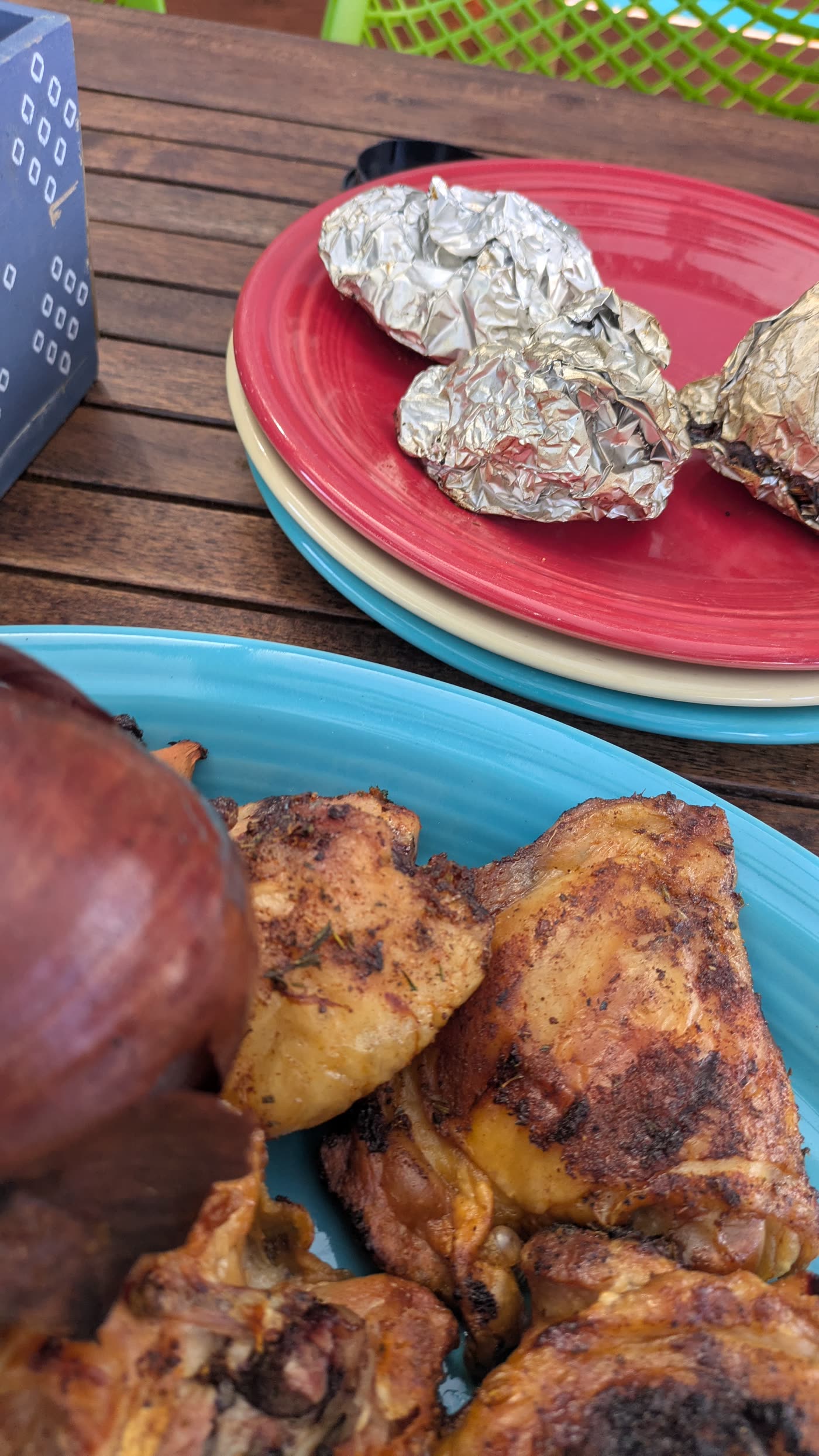
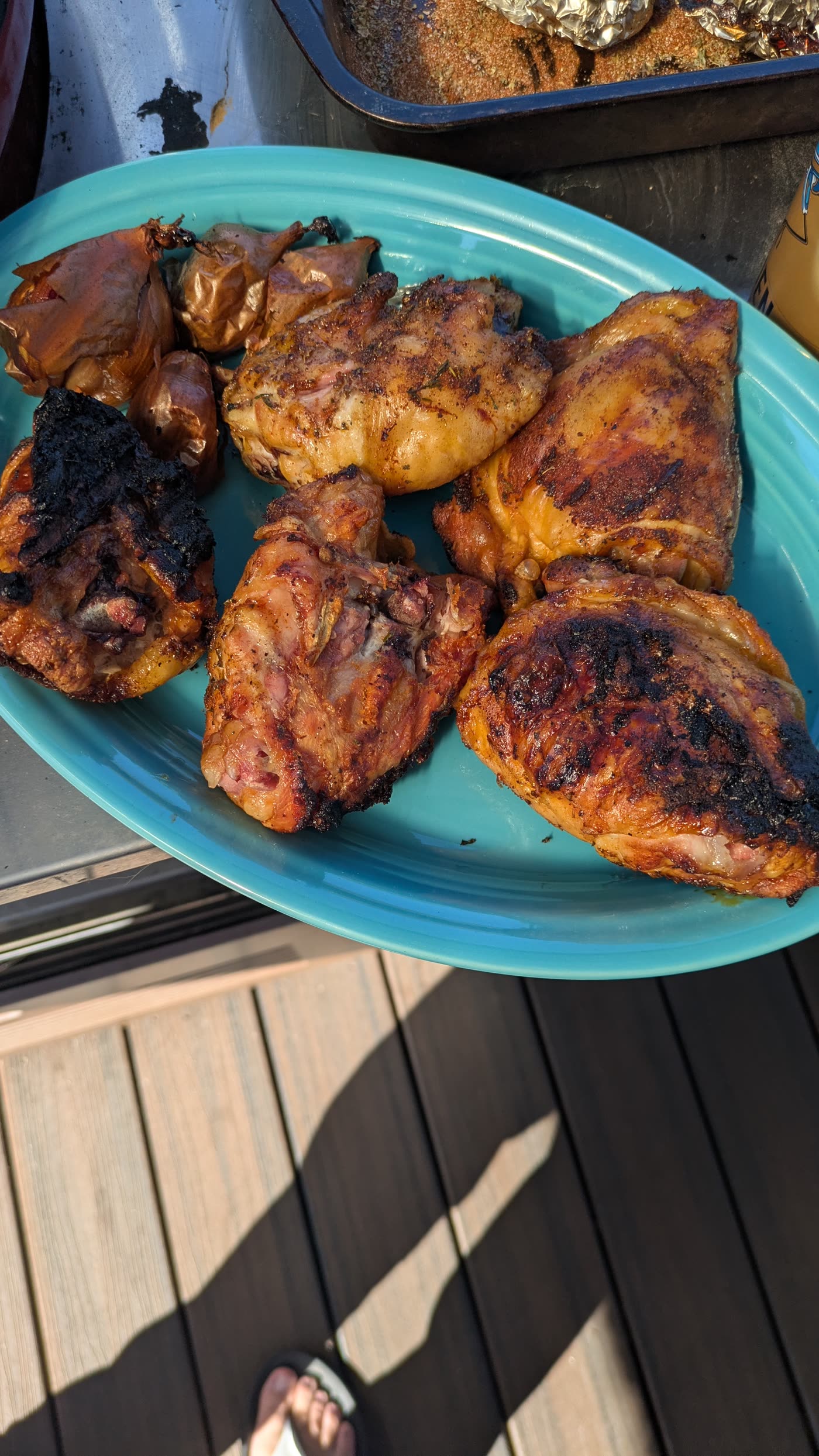
Quick aside, because it surprised me more than anything else today: bone-in chicken thighs, straight from the freezer, direct on the grate at 250°F. No defrost, no brine, no marinade. They came out great. One was a touch overdone but the rest were excellent.
That's a different post and probably a different book, but file it away. The Kamado at low-medium does a lot of work without you.
Next time
Same temp. Same packs. The plan for attempt #4: pull the garlic at 12 minutes, leave the onions for the full 35. Set a timer for the garlic, because I clearly cannot be trusted to feel it. And use heirloom garlic instead of basic supermarket heads — might tolerate the heat differently.
The book
If you only get one grilling book this year
This one. The Japanese Grill by Tadashi Ono and Harris Salat is on its third year of beating up other cookbooks on my shelf. It teaches by feel instead of by numbers, the recipes are short and uncluttered, and the flavor profile — soy sauce, miso, shichimi — turns out to be exactly what a Kamado wants.
You don't need a Japanese grill to cook from it. You barely need a recipe. You need the book's framing of how to grill, and the rest follows.
Comments live on YouTube.